 |
Justicia, left, and Veritas,
right, by Walter Seymour Allward, c. 1920. Cast for the never-finished memorial
to King Edward VII, which was interrupted by the onset of WWII, they were found
buried in 1969 and installed in front of the Supreme Court of Canada in Ottawa
in 1970. (Photos by Carol L. Douglas)
|
In reading Trollope over Christmas I was startled to realize
that the Victorians thought of Purity as a virtue rather than a state. It was a
trait to be nurtured, rather than preserved. In discussing this, my friend John Nicholson, pastor of Siloam Baptist Church
in Marion, Alabama, suggested that he and I each ask young people we know to
name and discuss the Four Cardinal Virtues of antiquity.
The Four Cardinal Virtues originated with Plato’s Republic. Although they were amplified
in turn by the Church Fathers, they are not exclusively religious, and should
be attainable by all men. These virtues are Prudence, Justice, Temperance and
Courage.
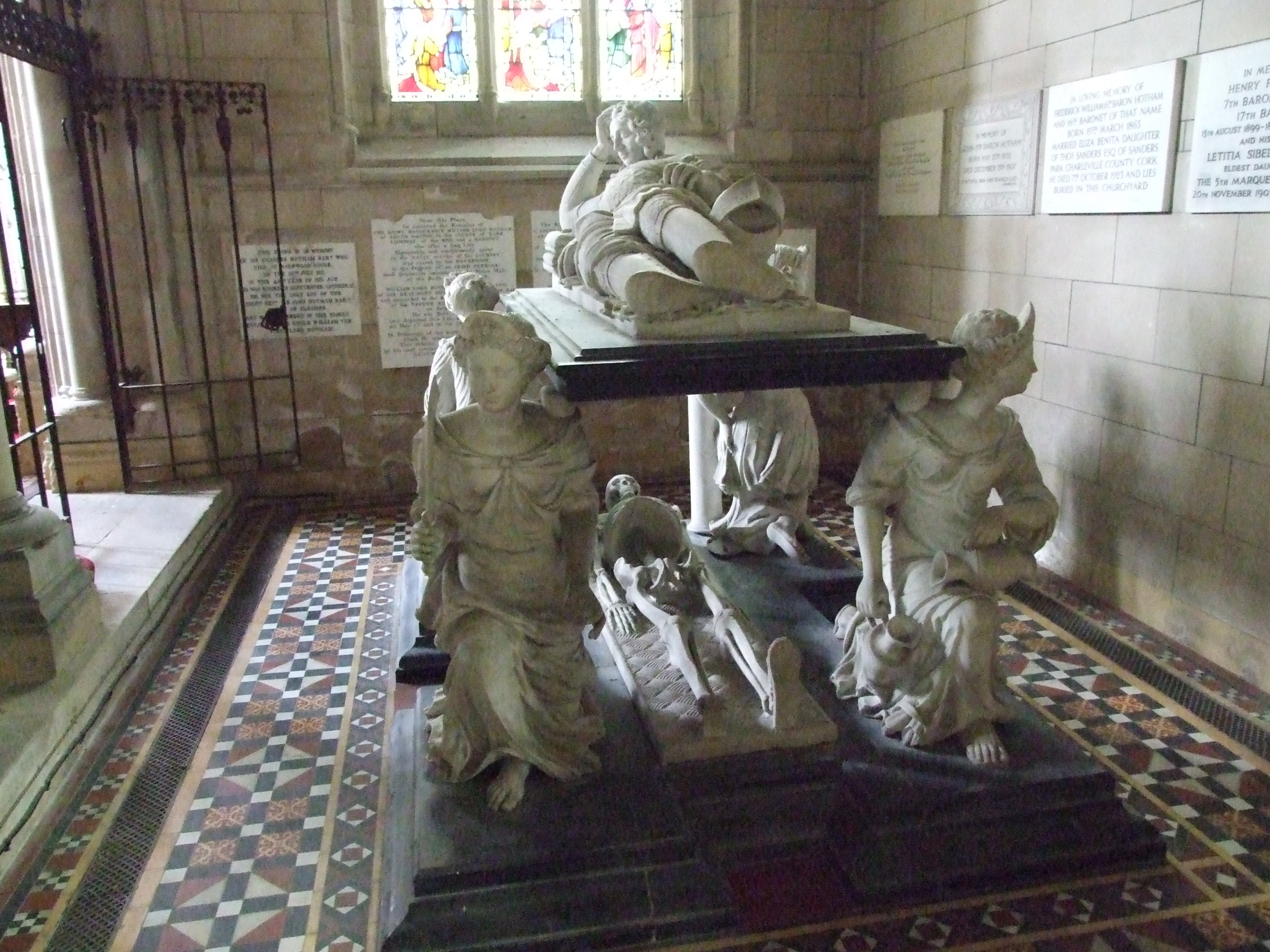 |
Tomb of Sir John Hotham, 1st Baronet, of Scorborough (died
3 January 1645), featuring the Four Cardinal Virtues and his wonderfully desiccated
skeleton.
|
These are in contrast to the three theological virtues of 1
Corinthians 13—Faith, Hope and Charity—which are unique to the Christian
moral worldview. The pairing of these sets of virtues comes down to us as the Seven
Virtues, often set against the Seven Deadly Sins.
John’s informal poll was a complete bust on my end. Only one
of the college-educated, church-going youngsters I asked had any clue what the
Cardinal Virtues are. The exception knew the answer not because of any superior
moral education, but because she is an art historian. She recognized the Four
Cardinal Virtues from Giotto’s Allegories of
the Vices and the Virtues in the Scrovegni Chapel in Padua.
_-_Google_Art_Project_-_edited.jpg/800px-Pieter_Bruegel_the_Elder_-_The_Tower_of_Babel_(Vienna)_-_Google_Art_Project_-_edited.jpg) |
Pride, as exemplified by the building of the Tower of Babel,
1563, by Pieter Bruegel the Elder
|
Until the early 20th century the Four Cardinal
Virtues were commonly represented as
female allegorical figures on public buildings and tombs; prior generations would
have had no trouble answering John’s question.
We’re accustomed to artists of the past taking on the great
questions of morality, but virtue and vice have been absent from the painter’s
vernacular since the 19th century, unless they were to be dealt with
ironically, surrealistically, or not at all. So imagine how intrigued I was by Jamie
Wyeth’s Seven
Deadly Sins at the Farnsworth
Museum in Rockland, ME. I thought it brilliant at the time and have not changed
my opinion.
 |
Anger, 2008, Jamie Wyeth
|
We have gulls here in Rochester, and they’re noisy, nasty
creatures, perfectly suited for the depiction of sin. But perhaps more
important, the Seven Deadly Sins themselves—wrath, greed, sloth, pride, lust, envy,
and gluttony—are all reflections of our animal state.
The question that’s turned in my mind since has been what
Wyeth meant by these paintings. There’s no irony in them, but the context of
his life and overall work would not lead an outside observer to believe he
understands those sins in the same way I do. On the other hand, I don’t see myself
having the moral intelligence to paint this subject. An interesting conundrum,
indeed.
