 |
Great Royal Wife, God’s Wife of Amun and Regent Ahmose-Nefertari
(1562-1495 BC)
|
A recent survey
by Thomson-Reuters Foundation shows Egypt to be the worst state in the Arab
world for women’s rights. (It’s also the most populous state in the Arab world.) This is depressing to anyone who believes that every
day, in every way, things are getting better and better. Artifacts from ancient
Egypt tell us that women’s status then was remarkably high compared
to today.
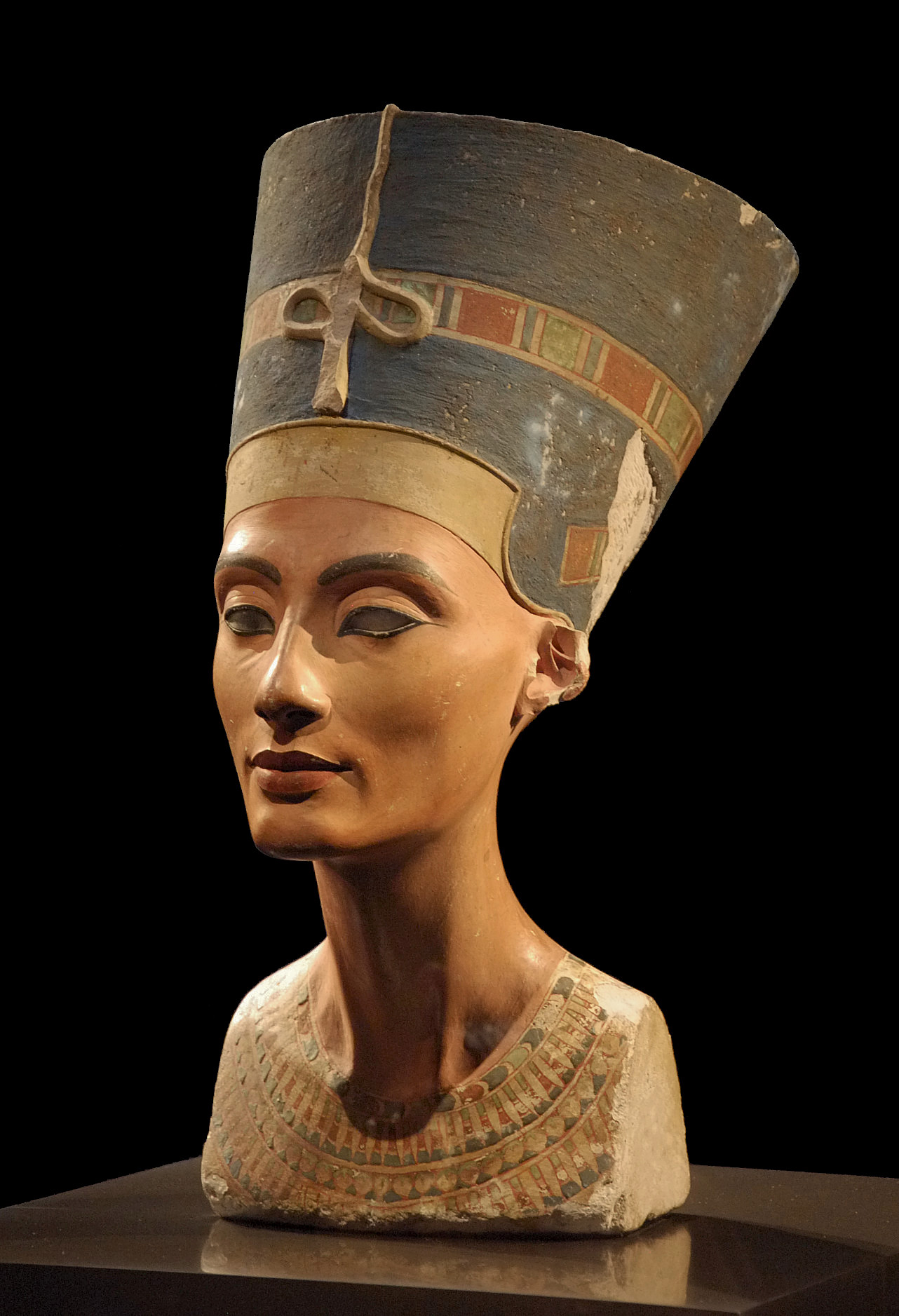 |
| Great Royal Wife Nefertiti, of course (c.1370-1330 BC). Some Egyptologists believe she had a brief run as a Pharaoh before the accession of Tutankhamun, but that is speculative. |
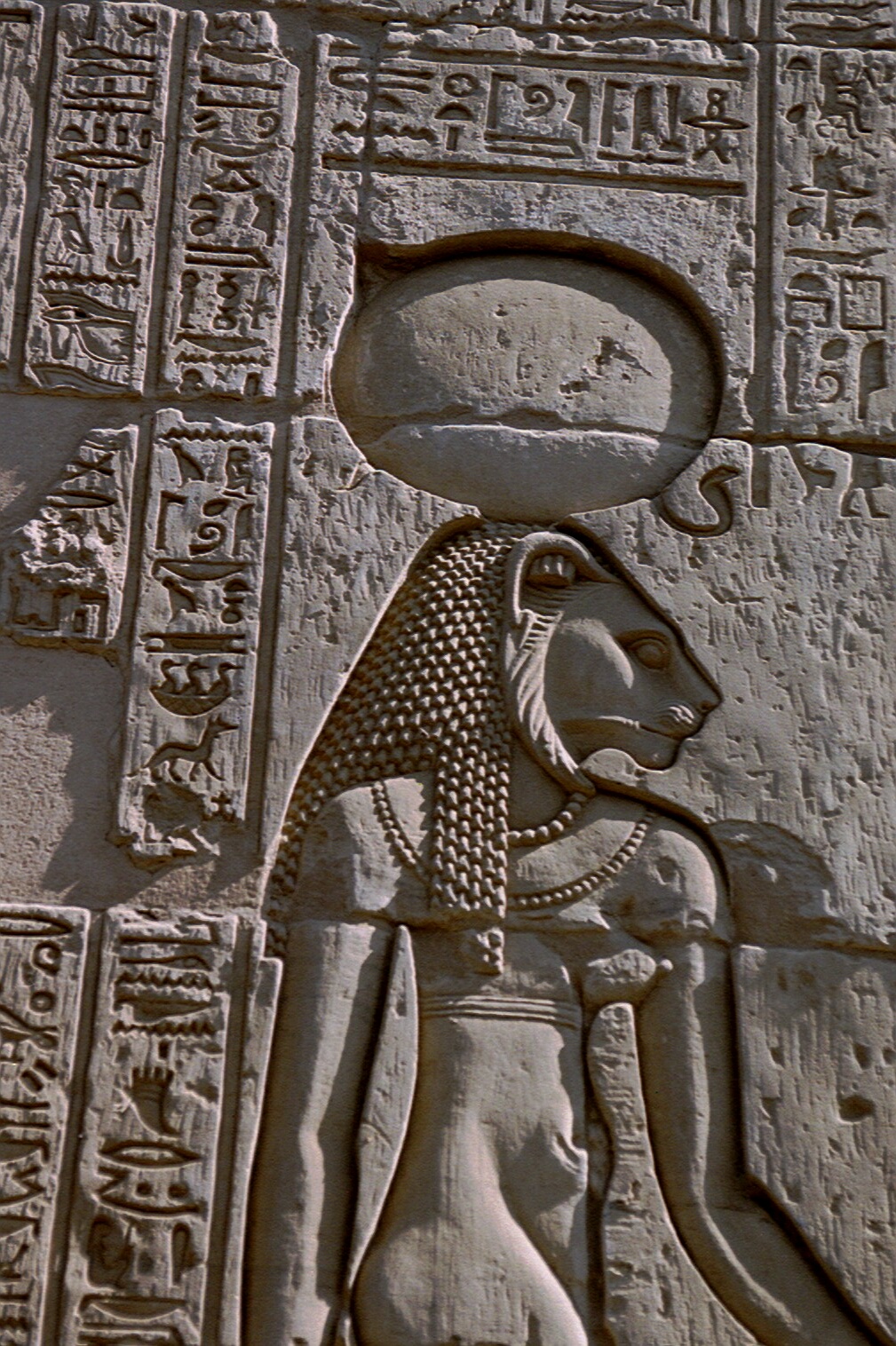 |
Sekhmet was the warrior goddess and goddess of healing.
She was represented as a lioness, here at the Ptolemaic Temple of Kom
Ombo.
|
As was true of their Greco-Roman and Mesopotamian neighbors,
most women worked, although upper-class women generally did not work outside
the home. An ancient Egyptian, Merit-Ptah (c. 2700 BC), is the earliest woman scientist
we know of; she was in fact memorialized as a “Chief Physician.”
 |
Colossal Sphinx of
Hatshepsut, Early Eighteenth Dynasty (1479-1458 BC). When a woman pharaoh was
represented with a false beard, it was a sign of her authority.
|
Women fairly regularly made it to the top of the pharaonic hierarchy.
Egyptologists are certain of many women pharaohs, including Cleopatra VII
Philopator, the last pharaoh of ancient Egypt, and Hatshepsut, one of the most
successful of all the pharaohs. In addition, some of the Great Royal Wives were
powerful politicians, including Tiyi and Nefertiti.
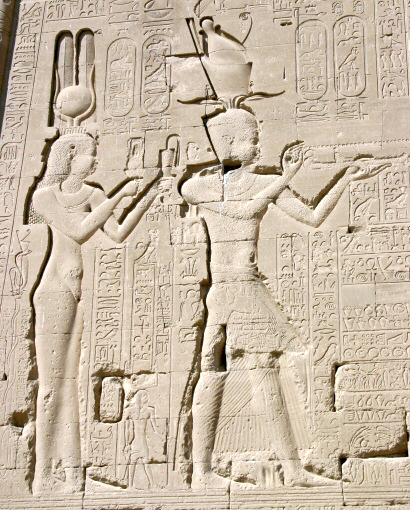 |
| The last Pharaoh, Cleopatra, with her son and eventual co-ruler, Caesarion. |
Pharaoh was responsible for interacting with the gods; he delegated
this duty to his priesthood, which included both men and women. God's Wife of Amun was the highest
ranking priestess; this title was held by a daughter of the High
Priest of Amun. A later position, Divine
Adoratrice of Amun, facilitated the transfer of power from one pharaoh to
the next. The Divine Adoratrice was responsible for Amun’s temple duties and properties,
essentially putting her in control of a large chunk of the economy.
 |
| A Twenty-Second Dynasty Divine Adoratrice of Amun, (c. 943-720 BC) |
How do we know all this? Art, of course. The stelae, statues,
paintings, furniture and papyri so laboriously created by the ancient Egyptians
for use in funerary rites make them the best-understood of all ancient
societies.
Let me know if you’re interested in painting with me in Maine in 2014 or Rochester at any time. Click here for more information on my Maine workshops!
