The people who made beautiful art in earlier eras weren’t focused on themselves, but on craft and how it fit into a greater whole.
 |
| The rood screen of York Minster featured the kings of England from William the Conquerer to Henry VI. That's the only reason these figures weren't smashed, and they give us an idea of what the saints in their niches might have looked like. |
York was founded by the Romans, slumped into inconsequence under Anglian rule, was rebuilt by the Northumbrians, conquered by Vikings, was sacked by the Normans, and then rose slowly again, only to be pummeled during the Dissolution of the Monasteries and the English Civil War. It is, in short, deep and complex, and that is visible on the very fabric of the city.
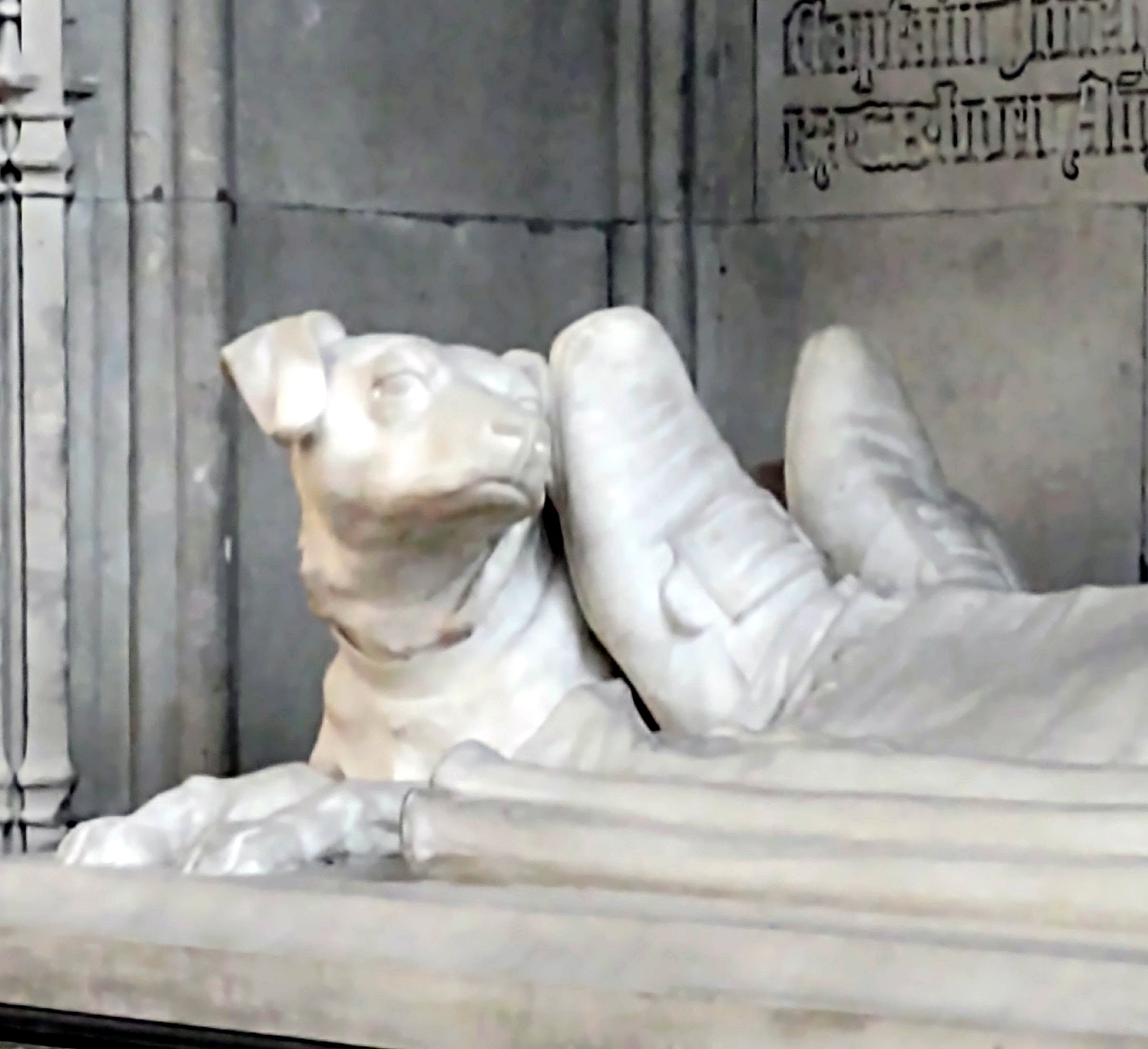
York Minster contains three monuments designed by Grinling Gibbons. They
don’t stand out. That’s not a slam on Gibbons, but rather a reflection of the
depth and breadth of good design in the Minster. It’s hard to be moved by massive
marble reliquaries to slumbering prelates, but they’re all masterworks. They
make their point powerfully.
 |
| There are thousands of beautiful small details in the Minster. |
The north transept contains the so-called Five Sisters window. Five long, narrow lancet windows are the largest example of grisaille glass left in the world today. Grisaille glass came into vogue after a prohibition on the use of colored glass by the Cistercian Order in 1134, and these are dated to around 1260.
These windows are so contemporary in effect that I wondered
if they were modern. Yet they are almost 800 years old. There’s a lesson there:
if your art is solely about ideas, it’s unlikely that it hasn’t already been done.
 |
| The quire at York Minster. |
York Minster survived the hacking and smacking of Henry VIII’s evil minions, but the saints in its innumerable niches did not. They stand empty to this day, a stark reminder of the dangers of iconoclastic fury. Still, one has a sense of the power of the cathedral’s design as it moves from broad concept to finest detail. First there is its standard cruciform shape, oriented to the east and balanced by a tower rising above the crossing. This became so standardized in ecclesiastical design that we sometimes forget that it was a new language then. So, too, was the inexorable visual sweep upward and the glorious light. It must have seemed amazing to people accustomed to squat wattle-and-daub or stone huts.
 |
| Contemporary needlework at York Minster. |
It is impossible to describe all the layers of design that were integrated into this new cathedral form—arches, buttresses, niches, gargoyles, right down to tiny bits and bobs of sculpture. It has evolved over the centuries. Thus, the tiny headless saints dancing on the western wall seem as much a part of the fabric of the place as the Great East Window. The statues were sculpted in 2004 by Terance Hammill and they are sending a semaphore message with their haloes: Christ is here.
 |
| Semaphore Saints, 2004, by Terance Hamill, York Minster. |
I was raised in the era of Brutalism and Scandinavian modern and have a fondness for stripped-down design, whether it’s in architecture or painting. But there’s something missing in that: the integration of detail and depth.
Part of that comes, I think, from the egocentricity of our
own age. The people who made beautiful art in earlier eras weren’t focused on
themselves, but on craft and how it fit into a greater whole. That’s as true of
the metalwork of the Vikings and Romans as it is of the ecclesiastical art at
York Minster.
 |
| The stonemason's yard is an eternal verity of a great cathedral as parts are constantly wearing out and must be replaced. |
The Five Sisters window is too extensive to have been the work of any single man. It fits in an austere blind arcade of banded stone, and is topped by another group of five lancets. I expect the glassblowers, the men who leaded the windows, and the stone carvers each had their specific instructions, handed down to them by someone who, in turn, was following instructions. These plans would have been rigorous and limited. That ruled out the self-expression we consider basic in our own time, and yet it resulted in one of the glories of civilization.


