Paint Schoodic

To see more paintings, learn about workshops and classes, and more, visit my website.

Friday, August 16, 2013

The Corn Harvest (alt. the Harvesters), 1565

This week I’m on the road. I’ve left you with six landscape paintings that should be on everyone’s Top Ten list, but probably aren’t (for the simple reason that there are way too many great paintings out there).
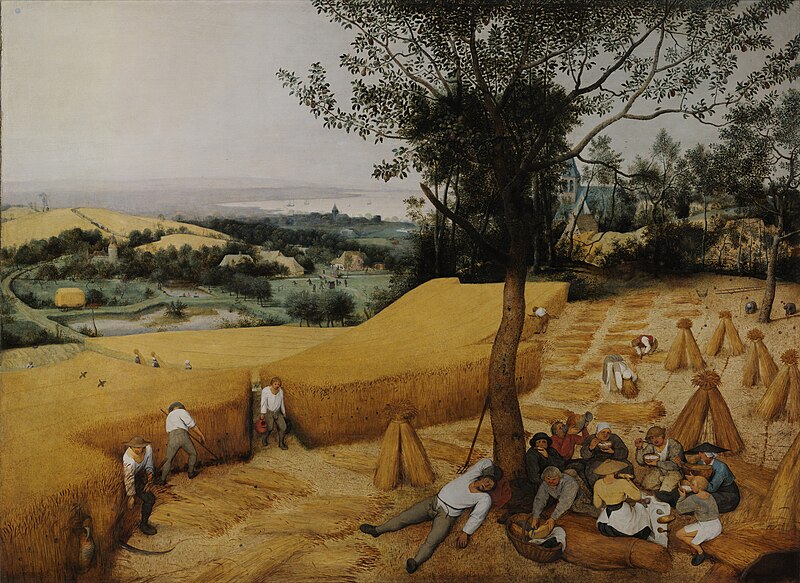
The Corn Harvest (alt. the Harvesters), Pieter Bruegel (Brueghel) the Elder, 1565
Bruegel’s great device is in putting important action of his painting into a seemingly unimportant corner—in this case, in the far distance, a group of villagers are cock throwing, a blood sport  in which a rooster was tied to a post and people took turns throwing coksteles (special weighted sticks) at the bird until it died.

This is one of a series of six paintings depicting the change of the seasons, the most famous of which is The Hunters in the Snow.

Join me in October, 2013 at Lakewatch Manor—which is selling out fast—or let me know if you’re interested in painting with me in 2014. Click here for more information on my Maine workshops!

Thursday, August 15, 2013

The Meeting (Bonjour Monsieur Courbet), 1854

This week I’m on the road. I’ve left you with six landscape paintings that should be on everyone’s Top Ten list, but probably aren’t (for the simple reason that there are way too many great paintings out there).
The Meeting (Bonjour Monsieur Courbet), Gustave Courbet, 1854
Courbet was one cocky artist, and he knew how to work at his own celebrity. In this painting, Courbet painted himself meeting his patron and supporter, Alfred Bruyas. The servant is—duh!—servile, but patron and artist are meeting on the same social plane.  Gone is any idea of the artist as a hired hand; here Courbet announces his own genius.

Courbet was controversial, charismatic and absolutely political. He was uncompromisingly realistic in both his landscape and figure painting (which were, in some cases, absolutely pornographic). I can’t aspire to his artistic genius, but I sure like his approach to life. On the other hand, he died of liver failure at age 58.


Join me in October, 2013 at Lakewatch Manor—which is selling out fast—or let me know if you’re interested in painting with me in 2014. Click here for more information on my Maine workshops!

Wednesday, August 14, 2013

On the Delaware River, 1861-1863

This week I’m on the road. I’ve left you with six landscape paintings that should be on everyone’s Top Ten list, but probably aren’t (for the simple reason that there are way too many great paintings out there).
On the Delaware River, 1861-1863, George Inness

That’s the Delaware Water Gap in the background. US Interstate 80 runs through it now, making it difficult to know whether such a limpid pool ever existed in this spot. But there is no mistaking that peculiar mountain range.

My geology text says that a water gap is carved by water flowing across a mountain ridge, but I find that impossible to contemplate. Evidently, it indicates a river that is older than the current landscape, which is why they’re common in the old, old Appalachians. I associate them particularly with Pennsylvania.


We focus so much on the Hudson River School painters that we sometimes forget Inness and the other tonalists. 

Join me in October, 2013 at Lakewatch Manor—which is selling out fast—or let me know if you’re interested in painting with me in 2014. Click here for more information on my Maine workshops!

Tuesday, August 13, 2013

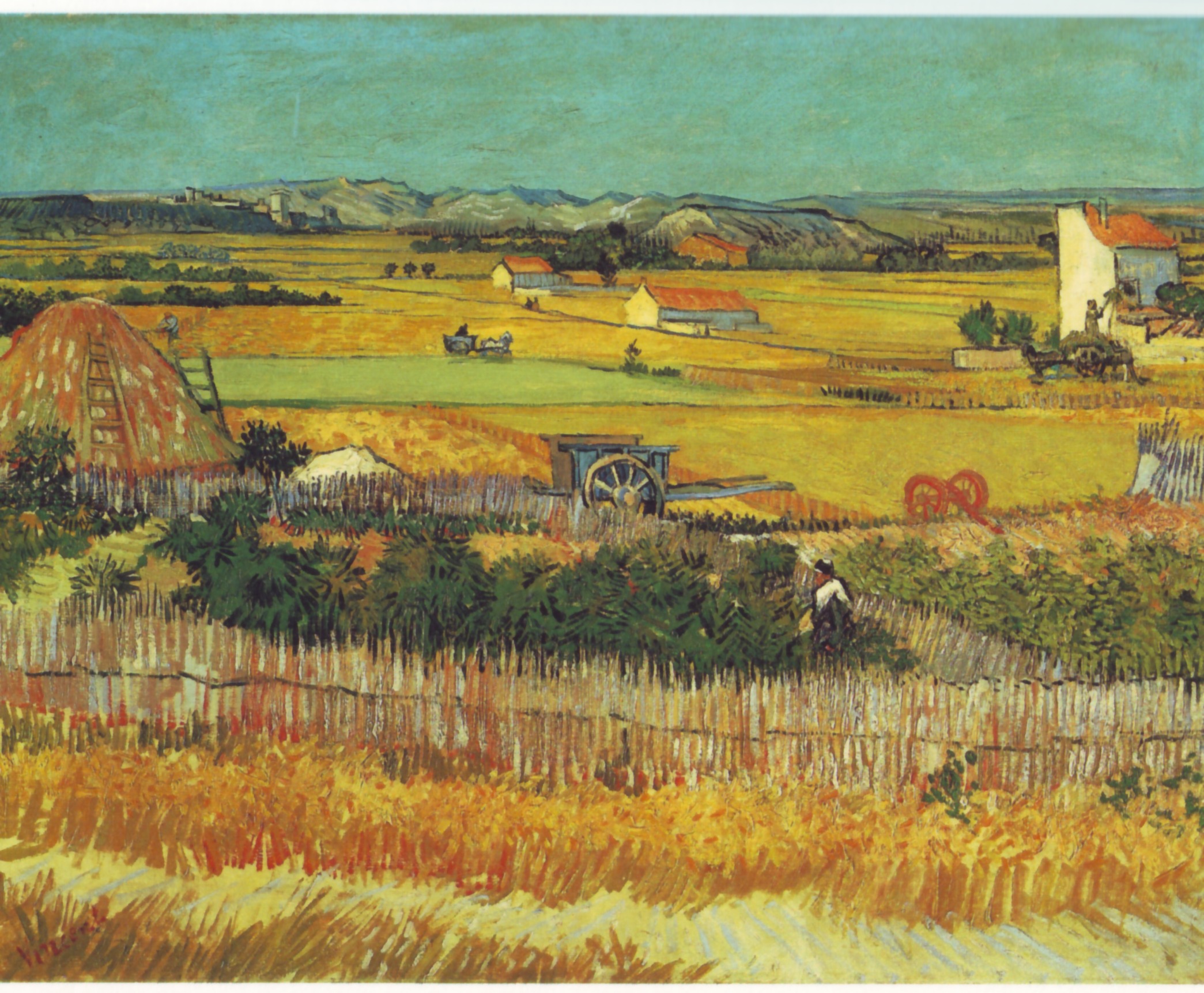
Harvest at La Crau with Montmajour in the Background, 1888

This week I’m on the road. I’ve left you with six landscape paintings that should be on everyone’s Top Ten list, but probably aren’t (for the simple reason that there are way too many great paintings out there).
Harvest at La Crau with Montmajour in the Background, Vincent Van Gogh, 1888
It’s absurd to try to pick out a “best” or a most-representative Van Gogh, so I just chose one which emphasizes the things I like most about him: his color sense, his meticulous draftsmanship, his love of place (in this case, the rocky outcrop of Montmajour) and his passing allusions to religion (the Benedictine abbey at Montmajour is in the background). It is high summer in this painting, and it’s high summer here. However, all the color sense in the world wouldn’t have made this painting successful had Van Gogh not trained himself to draw perfectly.


Join me in October, 2013 at Lakewatch Manor—which is selling out fast—or let me know if you’re interested in painting with me in 2014. Click here for more information on my Maine workshops!
Monday, August 12, 2013

Le pont de Narni, 1826

This week I’m on the road. I’ve left you with six landscape paintings that should be on everyone’s Top Ten list, but probably aren’t (for the simple reason that there are way too many great paintings out there).
Le pont de Narni, 1826, Jean-Baptiste-Camille Corot, oil on paper, the Louvre.

This oil sketch, done on site in Italy when Jean-Baptiste-Camille Corot was thirty, could have been done by a 20th century California realist, or in fact been done today. 

While the Impressionists are generally credited with inventing plein air painting, Corot was doing it decades earlier. Unlike the Impressionists, he was mixing his colors, and he didn’t have access to the full gamut of pigments they did.


Join me in October, 2013 at Lakewatch Manor—which is selling out fast—or let me know if you’re interested in painting with me in 2014. Click here for more information on my Maine workshops!