If you’re trying painting for the first time, it makes sense to use less-expensive equipment and supplies. Here are corners you can cut.
 |
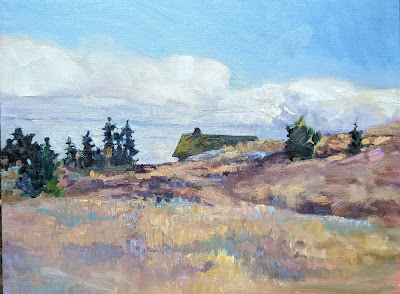
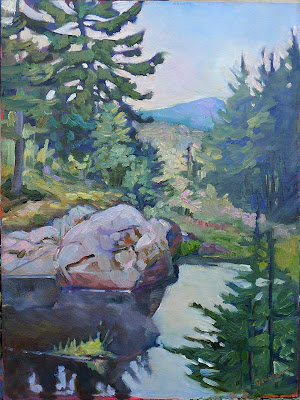
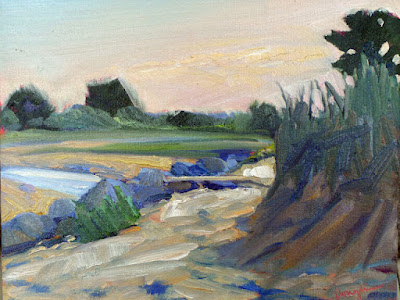
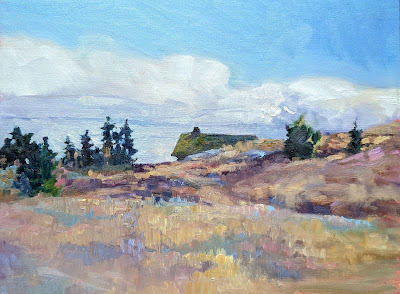
| Early Spring on Beech Hill, 12X16, oil on canvas, $1449 framed includes shipping to continental US. |
In 2018, when I first wrote about plein air painting on the cheap, this pine tripod easel cost $7.99. It’s ‘on sale’ for $14.99 now, a whopping 53% price increase in four years. That’s precisely why, if you’re interested in trying plein air painting for the first time, you should probably think about ways to do so on the cheap.
That’s the same easel I learned on in high school. I still
have it today, tucked into the corner of my studio. It’s rickety, awkward—and it
works. It was a standard style field easel until the invention of pochade boxes
that screw onto tripods. My father painted his whole life with a similar, home-made
model.
 |
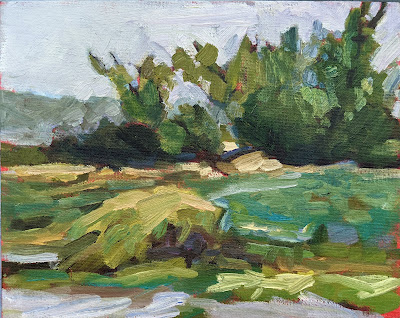
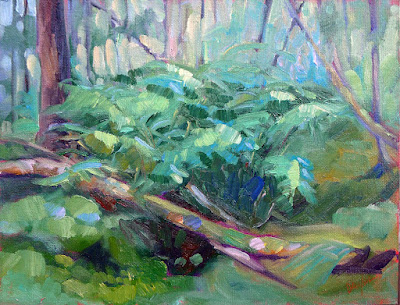
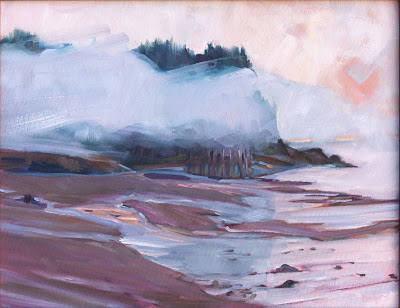
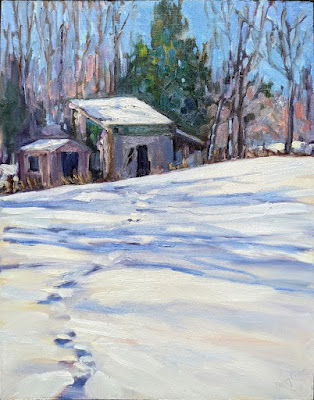
| Bridle path, 11X14, $1087 framed includes shipping to continental US. |
This easel, however, requires some sort of table. My thrifty friend Catherine uses an old TV table, but there are lighter versions now available.
I wrote recently about pochade
boxes for every budget. Dollar Tree’s 9X13
baking pan has only gone up to $1.25, so you can still make the cheapest
possible palette for $2.50, plus duct tape. What I neglected to mention in that
post was the possibility of buying a used pochade box. Some of my best art
tools were purchased second-hand. But you must have the time to be patient.
If you’re handy, you can make
one like I did. Or, there's the classic cigar-box pochade.
 |
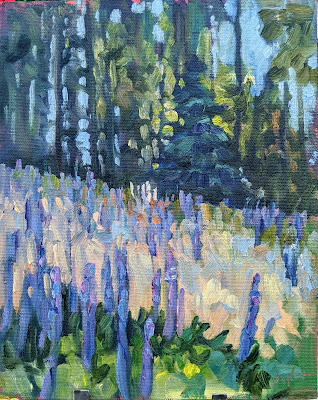
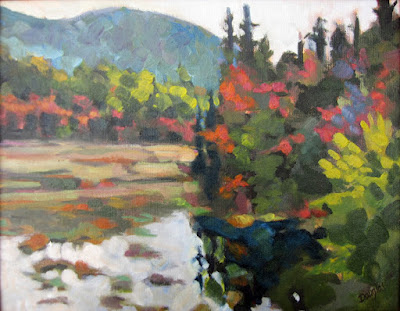
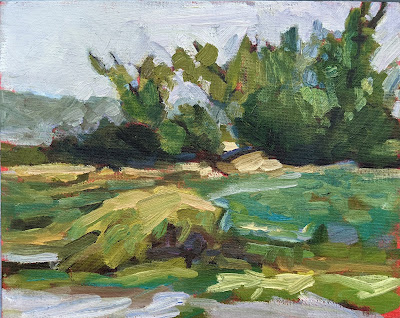
| Best Buds, 11X14, $1087 framed, includes shipping to continental US. |
In every media, the difference between professional and
student grade paints and pastels is the amount of pigment and the quality of
the binders. In some cases, more expensive pigments will be copied with hues.
A hue mimics the color of a single-pigment paint with less-expensive materials.
For example, “cerulean blue hue” is often a combination of zinc white and
phthalo blue.
A better solution is to avoid pricier pigments in the first
place. In earth colors, there’s almost no difference between the student brand
and the professional brand. The difference shows up in paints like the
cadmiums, where the pigment itself is expensive. There are modern substitutes
that do the job equally well at a lower cost.
 |
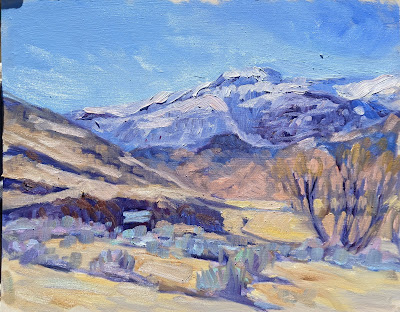
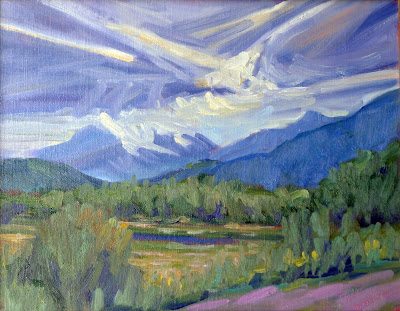
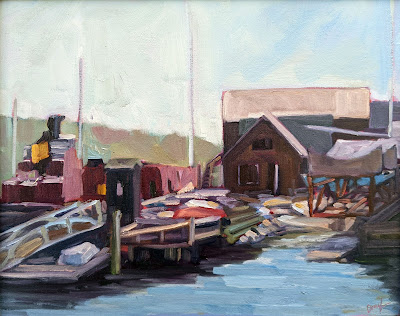
| Blueberry Barrens, 24X36, $3985 includes shipping in continental US. |
There are decent student-grade brands out there in all media:
Oils: Gamblin
1980 and Winsor
& Newton Winton.
Acrylics: Winsor
& Newton Galeria and Liquitex.
Watercolors: Winsor
& Newton Cotman or Grumbacher
Academy.
Pastel: Alphacolor Soft Pastels
If you decide you love plein air painting, you can replace
these student-grade colors with professional-grade paints over time.
Brushes don’t have to break the bank either. Even though I
have a slew of fine watercolor
brushes, I still reach for my Princeton
Neptunes. Oil and acrylic are trickier since cheap brushes sometimes drop
bristles in your work. Princeton also makes good, inexpensive oil/acrylic
brushes, especially their 5200 and 5400 series.
If you want a synthetic brush, make sure it imitates hog bristles, not sable. A
softer brush isn’t meant for alla prima painting.
It's plein air season again. Check out my workshops, here.