 |
| Bronze Colossus of Constantine, 4th century Roman. Not the one you expected, was it? |
Having finished the first of my seven large (48X36) paintings
for my upcoming show at Roberts Wesleyan, I’ve been thinking about why people
are motivated to make really big art.
Roman emperors erected colossi of themselves to publicly
declare their omnipotence. Nero had a bronze one that stood a staggering 30
meters tall. Rather than just trash it, his thrifty successors modified it into a statue of the sun god Sol Invictus. It was eventually moved to
the Flavian amphitheater we now refer to as the Colosseum. The thing stood around until the 4th century AD before being melted down.
The most familiar colossi to the modern viewer is the great
marble Colossus of Constantine. After Constantine defeated Maxentius at the Battle
of the Milvian Bridge in 312 AD, he decided to complete the Basilica begun
by Maxentius, crowning it with this enormous statue of himself. All we have left are the hands and face, since
the bronze body was also eventually pillaged and melted.
 |
Colossi of Memnon, 14th century BCE, Egyptian
|
The oldest colossi remaining those made by ancient
Egyptians, including the almost completely eroded Sphinx and the Colossi of
Memnon. These twin statues depict a seated Amenhotep III , his hands
resting on his knees and his gaze facing east towards the river. The smaller
figures carved in the front throne are his wife, Tiy, and his mother,
Mutemwiya. These figures were meant to guard Amenhotep's mortuary temple. In its
day, this was the largest and grandest temple in Egypt.
 |
The taller of the two Buddhas of Bamiyan, 554 AD, before its
destruction by the Taliban.
|
Gandara art is the syncretic art that happened with the
meshing of Greek and central Asian cultures from the time of Alexander the
Great until the 7th century AD. Among the art produced in this fusion were the colossal
Buddha sculptures carved into hillsides and caves, including the Buddhas of
Bamiyan, which were dynamited by the Taliban in 2001.
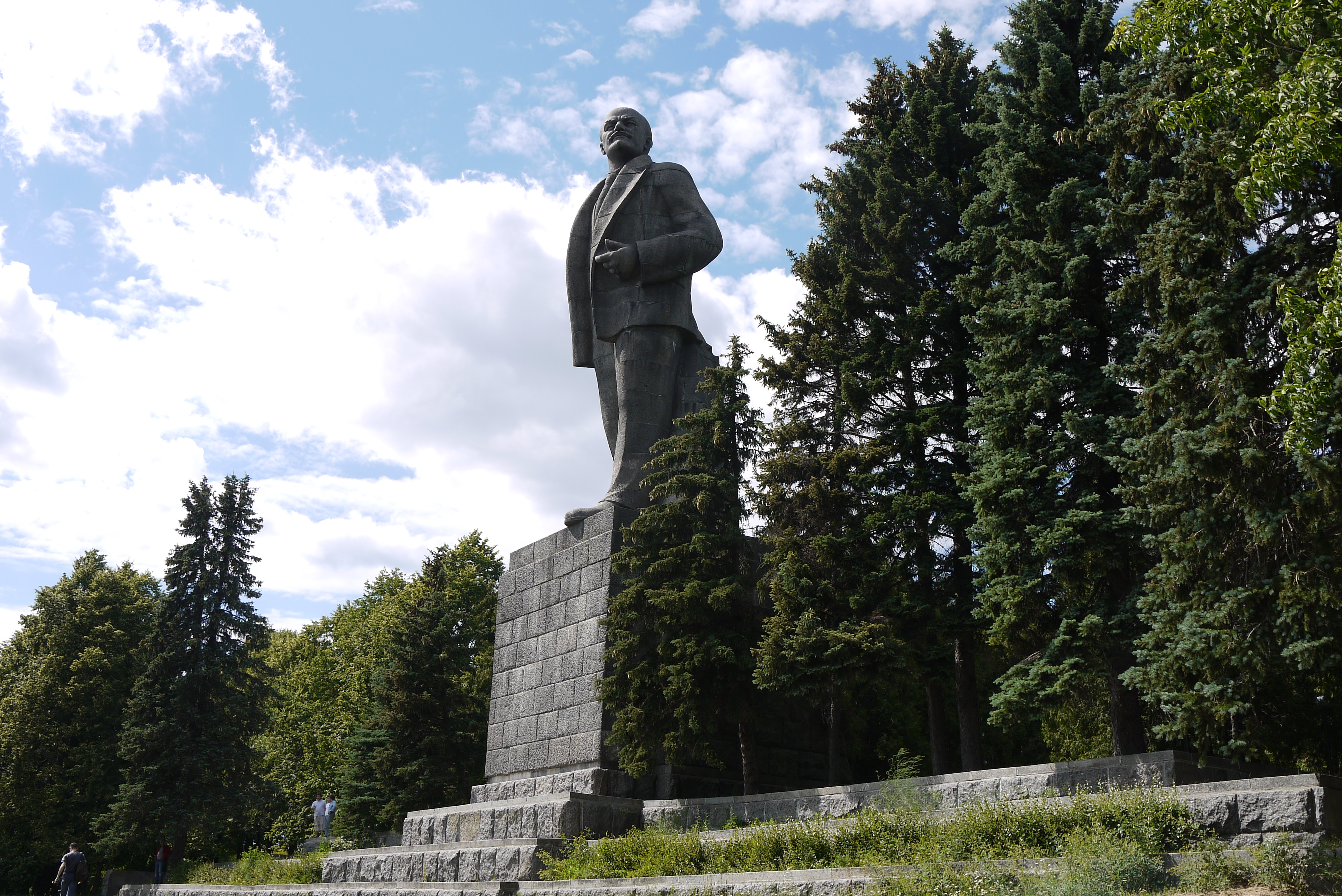 |
This statue of Vladimir Lenin in Dubna stands 25 meters high.
It was completed in 1937.
|
The former Soviet Union loved colossi, erecting enormous
statues of Lenin and Stalin for the same propaganda reasons as employed by the Roman
emperors two millennia earlier. And we Americans have our Statue of Liberty and
the heads carved at Mt. Rushmore.
Let me know if you’re interested in painting with me in Maine in 2014 or Rochester at any time. Click here for more information on my Maine workshops!

No comments:
Post a Comment